The timing of this post is oddly close to my last one because I had no intention of writing it. But writing is how I process, and I woke up reeling from the third episode of The Vampire Lestat, ‘Toronto,’ which premiered last night on AMC and AMC+. Please note: this post is spoiler FULL.
I’ve had a standing date with a white man every Saturday evening at 9pm since June 6th. AMC’s The Vampire Lestat is actually season three of Interview with the Vampire, the gothic horror television show that bewitched my soul in the Fall of 2024. The title is no misnomer: we watch vampires be interviewed. The first two seasons followed Louis de Pointe du Lac, played by Jacob Anderson, as he details the early years of his immortal life: the romance that led to his transformation and all of the devastating family, violence and yearning that followed. The first two seasons were squarely a melodrama with horror, queer romance and lots of blood throughout.
I didn’t really understand AMC’s choice to completely rebrand for season three, but the vision has become clearer with each week’s new episode. The Vampire Lestat is truly a different show. Whereas Interview with the Vampire was dark, broody, atmospheric and eloquent, The Vampire Lestat is bright, garish, scandalous and crass. I was weary about the transition for multiple reasons, most important being the shift in narrator from du Lac to Lestat. I tuned into Interview with the Vampire for Black vampires; it was just a plus that they were gay and problematic as hell.
Still Sam Reid, who has played Lestat in all three seasons, enchanted me with the vulnerable softness he brought to such an unlikable character. So, I was all in on season three and have been on time for my date the last two weeks. AMC+ briefly stood me up last night with their platform having an apparent meltdown: muddling show and episode titles and dropping the new episode nearly three hours late. I don’t know what’s going on over there, but I know what’s going on in my head.
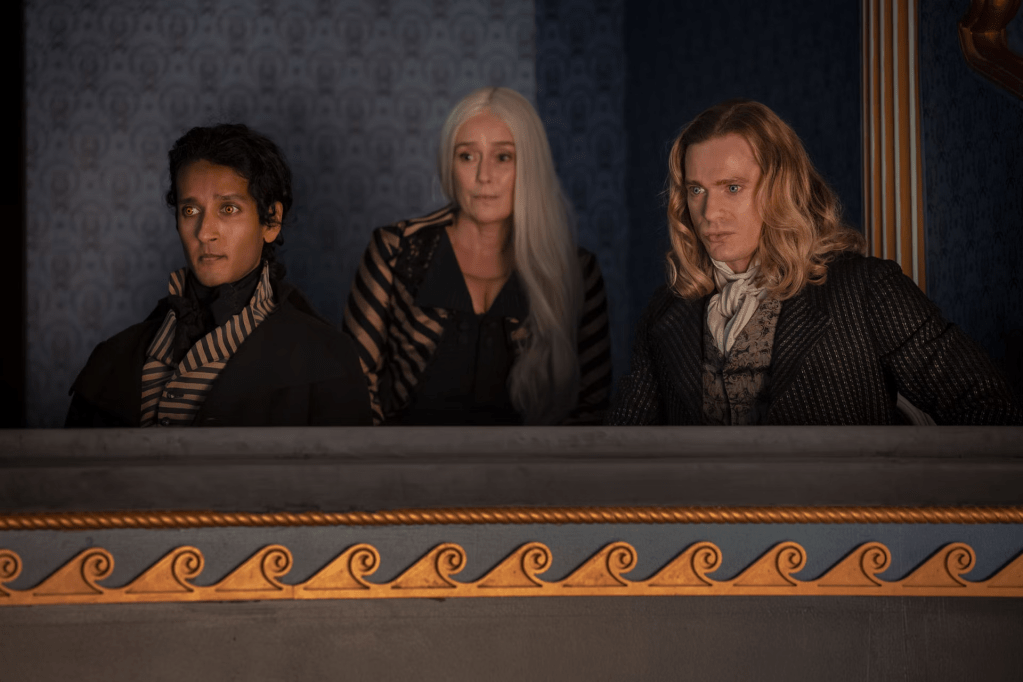
Photo Credit: Sophie Giraud/AMC
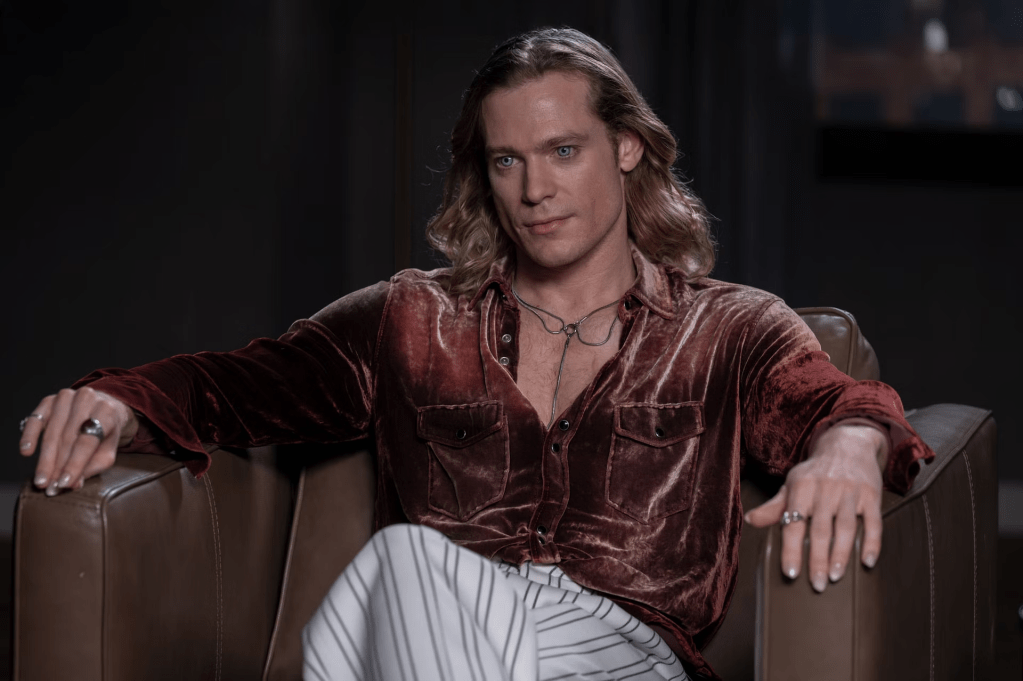
Photo Credit: Sophie Giraud/AMC
About Last Night…
From its very first episode, the show has been positively bonkers. I’ve had a much harder time getting into the swing of this season or discussing it with folks who aren’t already fans because it’s not something that would ever, ever interest me organically. The Vampire Lestat could be boiled down to very simple terms: white man has destructive and self-serving mental breakdown. There’s almost certainly an audience for this core premise which commonly permeates Western media, but then you add in the vampirism, incest and sexual violence and you’d lose quite a bit of mainstream appeal. For someone like me and all of my friends who watch the show, people who showed up for vampires of color, this season was a premeditated challenge. Even those in my circle who’ve come to love Lestat over the past two seasons were nervous for a whole season in his orbit.
And make no mistake, Lestat has gravitational pull. Episode one, Detroit, left me profoundly disoriented, slightly disgusted and extremely nervous. Showrunner Rolin Jones, the cast and AMC’s marketing team did an excellent job preparing us: this was not to be a straightforwardly new season of Interview with the Vampire. This looks, feels, and sounds like a completely different television show. I thought I was ready for the transition; admittedly the adjustment has had more turbulence than I anticipated.
Last night’s episode was a whole new depth of bizarre heartbreak, and I am only getting more afraid for what’s ahead this season. And to be very clear, fear about this season’s content has already been a burning bush in my chest. Anderson saying his character, Louis, had no happy moments this season struck the match; Jones saying he hopes no one throws up when watching dropped the match onto a pile of tinder.
The first rattle to my cage last night was watching Lestat’s mother, Gabriella, tauntingly seduce and loudly fornicate with her son’s doppelgänger. I know we’ve had ample time to process the incest; episode one leaned straight into it. But I found myself having a cerebral processing moment that ‘yes, this woman would be sexually attracted to the man that looks like her son because she is sexually attracted to her son. Right. Right.’
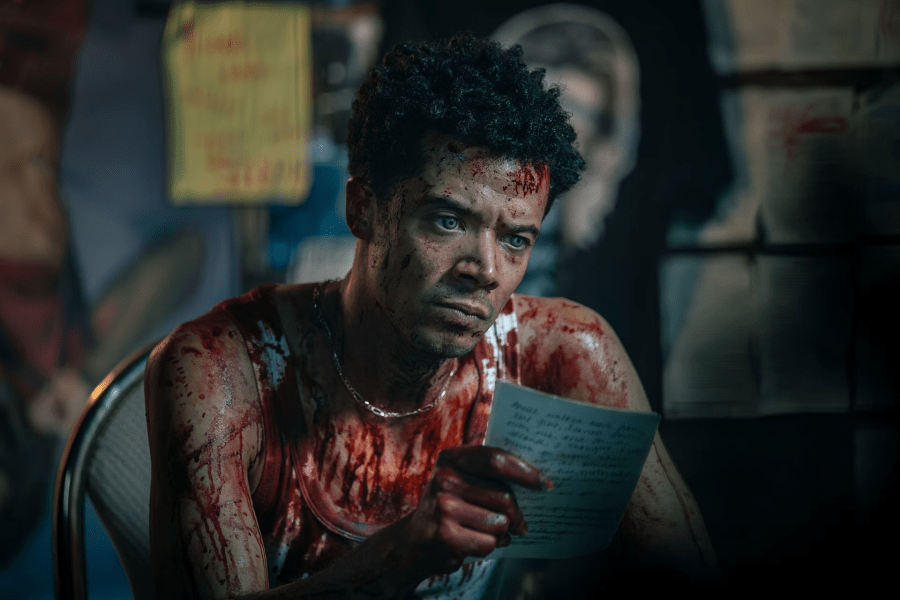
And then…the episode just kept going. Lestat begins to have a breakdown, and my heart was breaking for this sometimes irritating, always compelling man. But then he wasn’t sobbing; he was laughing. Then, Louis hunted down the vampire that assaulted his daughter, murdering a whole coven along the way, freeing captured humans, looking scrumptious while covered in blood (I know, I know, but I’ll unpack that for myself alone—thank you) and reciting his daughter’s words describing the assault before setting his daughter’s rapist aflame. Then, Claudia’s words—in Louis’ voice—are overlayed with a violent, brilliantly acted depiction of Lestat’s own assault centuries earlier by his sire, the vampire Magnus.
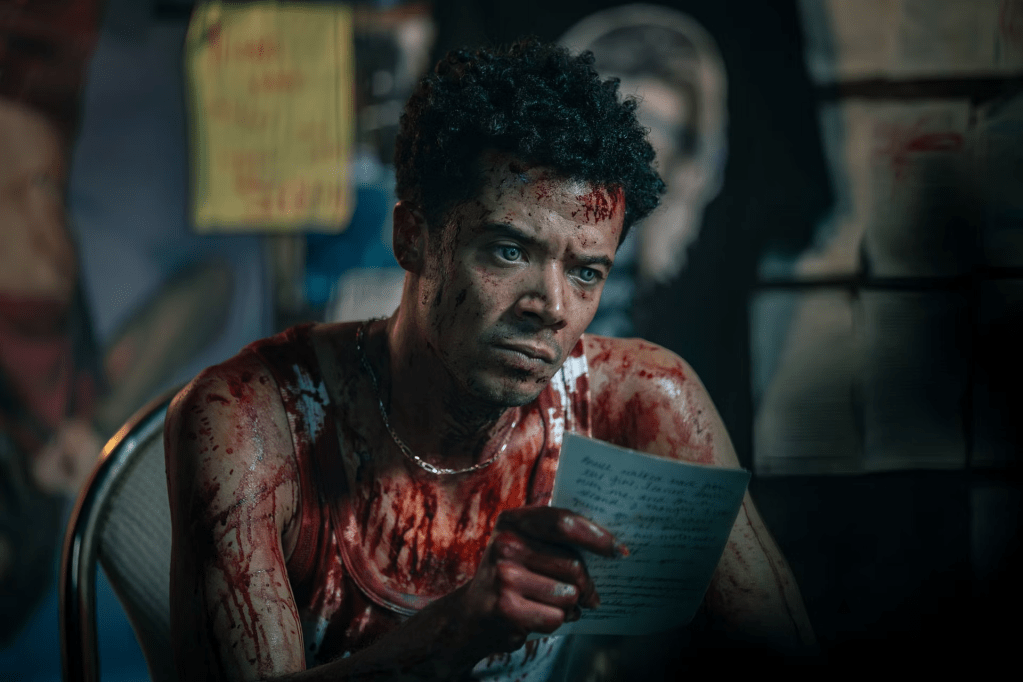
Photo Credit: Sophie Giraud/AMC
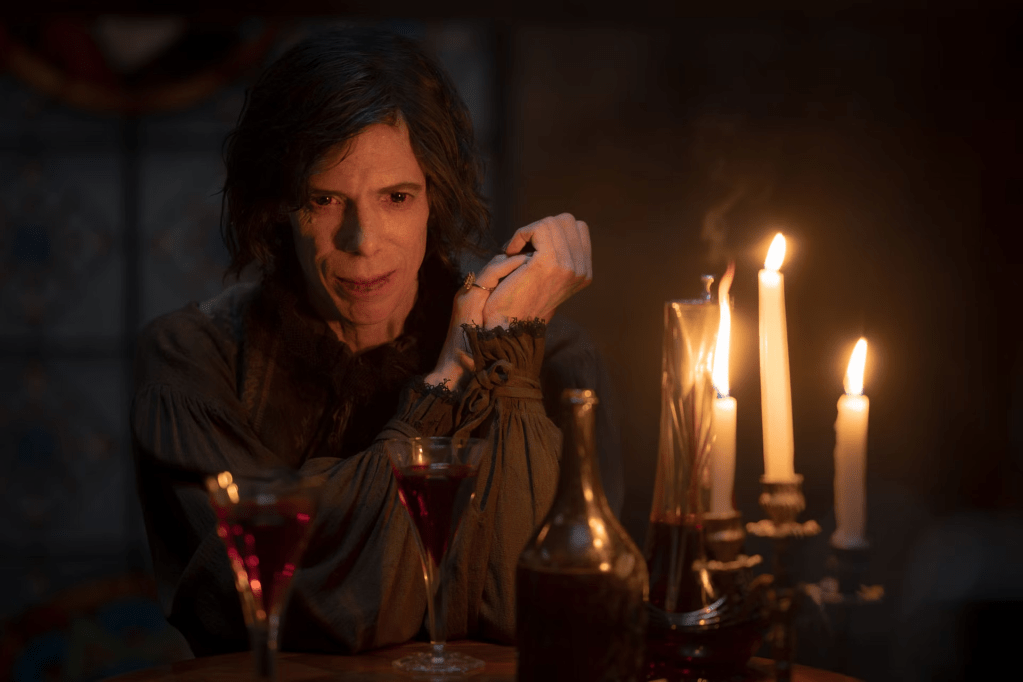
Photo Credit: Sophie Giraud/AMC
Interview with the Vampire has been critiqued before by fans for how the writers depict and discuss sexual assault, and those folks have much more expertise and many more layers of analysis than I have. For that reason, my own opinion has remained mostly neutral on the topic. I have felt before that everything about how Louis treats Claudia’s diary entries—a means to tell his own story, a tool to force a level of intimacy that she did not want with him—remains a violation and with that violation, telling of Louis’ relationship to his daughter. It’s also a sometimes-needed reminder that for his progressive views on race, Louis is still just a man—content to violate a woman for his own satisfaction. (However intentional or knowing the writing of Louis is, and I doubt it’s much of either on this topic, I must applaud the writers for accurately capturing my experiences with most Black men). Still, last night felt particularly gnarly as Claudia’s private pain is levered as a conduit for not one but two men’s trauma: her father’s own assault and her other father’s grief. All while she is still physically invisible, absent from the screen entirely.
Moving right along, we’re back in 18th century France getting Nicki’s story which I find tediously boring though it does give us a pocket of my Armand which was a humorous break. And, my goodness, was Lestat’s version of that balcony scene humiliating to witness the first time the clip was released weeks ago. (Yes, it’s team #ArmandToldTheTruth over here, not because I believe him, but because I love to root for villains.) Then we’re back in the present, and the ghost of Lestat’s rapist taunts him until he fatally crashes his car.
Except, of course, he’s immortal. And it’s never felt like such a curse. For his confident walk away from the wreck, after watching him desperately reciting the same prayers that didn’t save him centuries ago fail to grant him reprieve in his mind now, I was filled with dread and empathy for this character who surely, surely wishes some or all of him had perished. Finally, we end with Louis in a diner visiting his deceased daughter’s doppelgänger, portrayed by the fantastic Delainey Hayles, and it becomes apparent that Louis is still drowning in guilt and grief for his failed foray into fatherhood. As he should, though he should stop making it other people’s problem.
The After Party Left Some Things to Be Desired
Upsetting and horrifying as it is, ‘Toronto’ is an excellent episode of television. The writing is so magnificently slipping between past and present that the parallels and reconciliations slam into us viewers like bricks. It’s evident that the scripts are balanced with enough humor and intrigue to maintain the season’s inertia.
Like previous weeks, I immediately watched the podcast-style cast/crew interview directly afterwards, The Vampire Lestat After Dark. And that’s where the already complicated feelings truly began to sour. I’ve yet to be impressed with any of the previous After Dark episodes—they’re such a brightly lit, tonal oddity after such heavy TV. I fear the cast/crew may have too different an emotional relationship to their show than the viewers do especially fresh off a first watch because it turned my stomach a bit to hear Reid and Jones laughing about a song depicting abduction and sexual assault.
And look: it’s not for me to dictate how anyone processes trauma. It’s not for me to overlook how potentially traumatic it may have been for Jones and Reid to write and act out those scenes. But I can’t help my own reactions to theirs, and I didn’t find it funny at all. I see and can appreciate the creativity in how Daniel Hart, composer and songwriter, portrayed Magnus on the song ‘Your Biggest Fan.’ It’s an exceptionally deft window into Lestat as a character—how he’s attempted to manage his own transformational trauma. Which is why the After Dark discussion felt so discordant: there’s nothing humorous about the song to Lestat. It’s rich with empathy and romance and yearning. And as a viewer, the power of the show and its writing lies in the ways we’re able to feel for the characters, so I’m not able to laugh at those same characters straight after bearing witness.
Generally, After Dark is just teeming with offbeat strangeness. I also didn’t understand why the interviewer, Lizzie Bassett, asked Anderson if he was jealous of Reid getting to perform music on the show. I don’t believe it was a mean-spirited question, but it felt pointless and inappropriate at best. Anderson has been clear many times in the past about his desire to separate his two careers. I’d expect the host interviewing him weekly to know and respect that. She also asked Hart about the script and music writing process this season, a question that was answered no less than three times before the season even began airing; I answered the question at the same time as Hart from my couch. And I wish they would stop inviting Mark Johnson, executive producer of the show. I’m still holding a grudge from his abysmal comments dismissing the cast members of color’s contributions to the show’s success at the Deadline Contenders interview last year, but also, he never offers any interesting insight about the show. The only thing he could add that I would find interesting are tidbits about the behind-the-scenes negotiations to support and continue the show, and he’s always cagey about those matters.
Next Stop: The Devil’s Road
Overall, AMC gave me a very strange Saturday evening. I want to be clear: I was stunned when the credits rolled at the end. ‘Toronto’ is undoubtedly an incredible piece of television. From the writers to the composers to the actors to the set designers—everyone is firing on all cylinders. I went to sleep full of the reminder that this is a horror television show, and all the visceral feelings are crafted to disarm.
I will continue to show up for my weekly date, though I am now nervously saying a little prayer before I do so. Any other fans of Interview with the Vampire/The Vampire Lestat struggling with last night’s episode?


 Kyra's Immortal Longings: Life As It Comes