In February, Saturn entered Aries, a return to its placement during my birth. In general, Saturn in Aries is associated with taking initiative; the last time Saturn passed through Aries was from 1996-1999, the peak of the dot-com boom. “Saturn can teach us a lot about grit,” says astrologer Chani Nicholas.
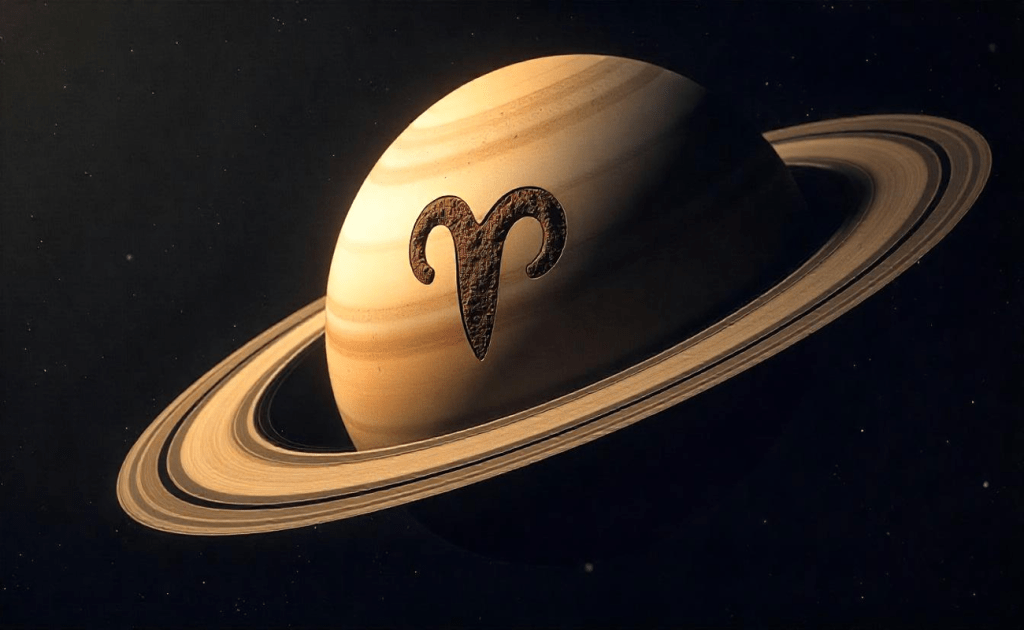
Saturn returns often usher in an influential era of personal growth that usually includes some heartaches and hiccups. Most of my friends and peers had their Saturn returns years ago when we were 27, and mine will last the next two years through my early thirties. I don’t anticipate any of the traditional milestones of a first Saturn return—no home purchases, becoming a parent or career changes on the horizon.
Nonetheless, at the urging of Saturn, I’m rolling my sleeves up.
The last couple of years have left me weary; partaker in a zombie-like, devastation-fueled apathy towards the world. Between witnessing the Palestinian and Tigray genocides on a global stage, the proliferation of hateful, anti-immigrant sentiment and ICE throughout the nation, and watching education lose funding to police over and over and over again in my own community, recent events have felt demoralizing. As a student of history, I’m aware none of these injustices are solely recent matters, nor can they be laid at the hands of any one president or regime. This knowledge hasn’t made the days easier to endure, though. I’ve felt weighed down by the thought that capitalist white supremacy has wreaked havoc for generations and will only continue despite the small battles won.
I never abandoned my principles: I maintain my work in social impact, I practice empathy, I recycle. Still, I tuned out of the news. I became myopic—concerned with me and mine exclusively as opposed to the broader sociopolitical ecosystems we navigate. I allowed defeatist fatigue to cloak my own hopes for a better future.
Then, I stumbled upon a meme pack on Twitter that combined ridiculously edited, deep fried and cloudy images with large, white block text reminiscent of the images I used to create on Facebook meme generators back in 2009. “Remember…the world is full of wonder and beauty beyond our comprehension” one of the memes says over a photo of Sesame Street’s Bert and Ernie embracing at the beach. “Fuck Nihilism. All my homies recognize the absurdity of life and give it our own meaning” another meme says over an image of six young men posing in sagging pants and throwing gang signs in a store.
I admired the positive messages of the memes, and their graphic quality sparked a pleasant wave of nostalgia. Ultimately, I downloaded them to my phone because they made me chuckle. They sat, unused, in my meme folder (a robust collection of 355 images and 109 videos) for months. I’ve been revisiting them lately.
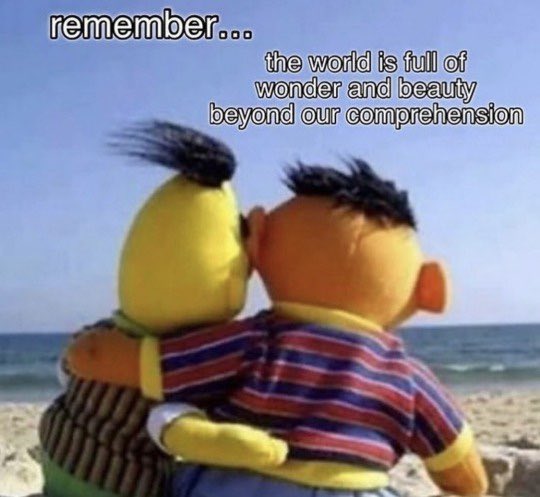
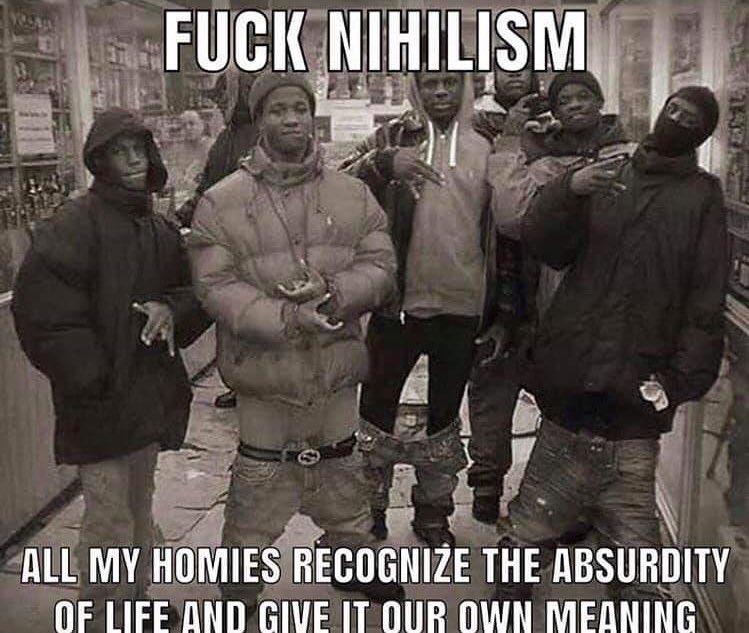
The kids call it #hopecore. Pleasant or humorous imagery combined with uplifting messages created and shared to promote optimism. The genre has since expanded from memes into short-form videos on TikTok and even a mostly upbeat, pop-rock music playlist genre. There are hundreds of tweets, 130,000 Instagram posts and over 700,000 posts on TikTok with the hashtag. Scenic views of nature, triumphant scenes from movies and television clips, heartfelt family reunions, playful puppies and good old-fashioned memes like the ones I saved—#hopecore calls on all types of uplifting content. It is a trend and genre that is as much a testament to the state of Gen Z and Gen Alpha mental health as much as a reminder that many, many people still choose to smile.
While critics dismiss #hopecore as a fleeting social trend and an agent of consumerist antipathy like all social media, the trend found me at the right time in my life. I’m inspired by the youth’s search for positivity in a bleak time, and I’m marrying the trend’s optimistic feelings with my principles. Luckily, a framework for this exact effort already exists.
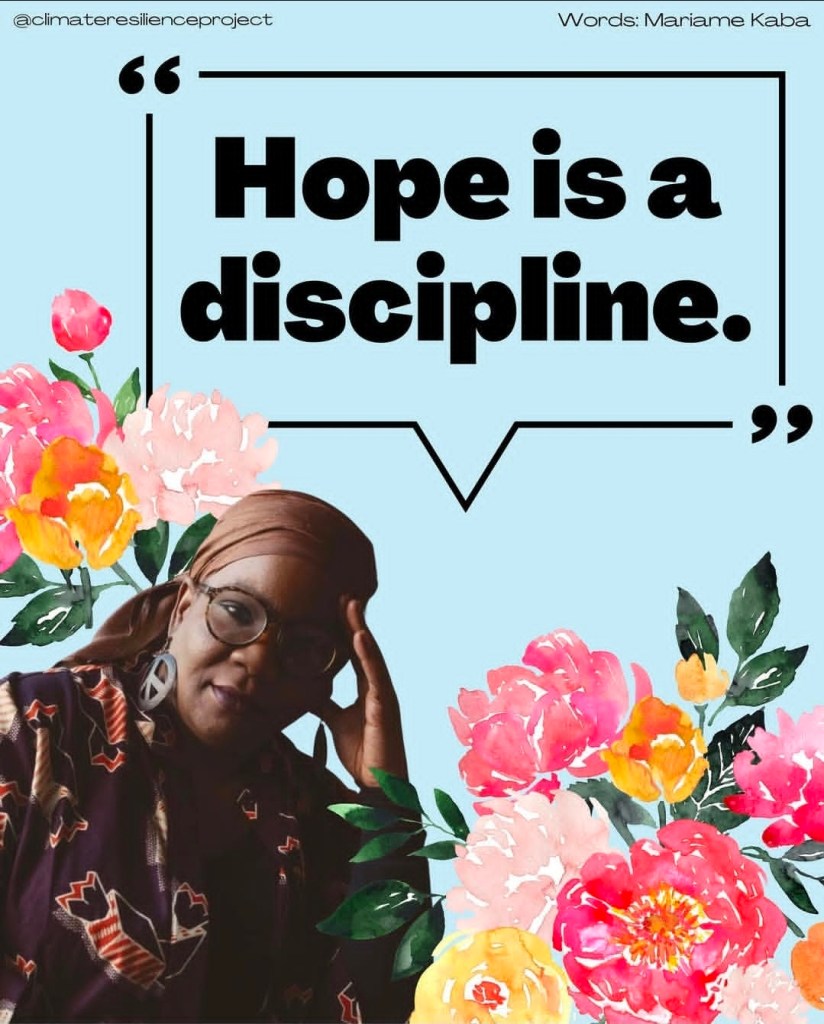
Abolitionist organizer and educator Mariame Kaba famously said “hope is a discipline and we have to practice it every single day.” This bold proclamation inspired me. Feelings, after all, are fleeting. As are my energy levels, my social battery, and my desire to engage with the world around me. But discipline and practice are commitments.
While I’m not without my own commitment issues, I inherited a legacy of hope as a discipline. What of my parents who enrolled their first-born in private school to ready her for college? What of my great-grandparents who left behind everything they knew in Arkansas to raise their children in California where those children would have more freedoms? What of my ancestors who found the fortitude to survive abduction and forced labor? What can I call any of these acts other than discipline, practice, hope?
Kaba writes that “creating spaces and opportunities for this [practice of hope] work” is critical. I’ve recently been exploring more community-based and locally run events and venues to nurture the discipline of hope. Moreover, I’ve begun drafting some simple resolutions for my 29th year:
- Regular volunteering. In addition to quarterly volunteering at community social events, I am committing to bi-monthly, local service. This commitment is held on my calendar.
- Hosting. I have the blessing and privilege of access to physical space. I will bring more people together, so that community-building and caretaking can occur joyfully. I am in the process of selecting dates for quarters one and two of this year.
- Writing. I will continue to tell the truth—as I see it—with my words. I will write for amusement and growth and my own mental download, but I will also write to tell the truth. I will continue my 54-day streak of writing for at least twenty minutes nightly.
I will no longer be paralyzed by despair. Even on hard days, Saturn in Aries urges me to move forward, even if only in my own small ways. These commitments to my beloved community are also to myself—I see myself for who I am today, and I will do my best to fulfill my vision, deepen my practice and honor my feelings.
And maybe this commitment, this orientation around hopeful action, won’t last forever. I respect my autonomy as a fluid, ever developing being and my right to be whoever I want to be. Maybe my brain chemistry will shift, or I’ll experience a catastrophic loss. Maybe, in the future, I’ll decide that hope isn’t serving me in the ways that I need most.
But maybe not.
Maybe, instead, it’ll go just like this:
I am afraid every single day. I cry when we have to tell children to be cautious, that not all adults are safe people. I cry when they brutalize and displace homeless neighbors. I cry every time I hear Stevie ask, ain’t that lovin’ you?
I am making a home. I am nurturing a garden. I eat its fruit. I hug my mother. I hug my brothers. I hug my best friend. And my other best friend. And my other best friend. I buy champagne. Keep it chilled. I sing all night. I swallow rich, delicious ice cream. I write my thoughts out. Sing some more. I mine the bottom of my heart daily and dig and dig and dig for compassion. I haven’t run empty yet.
Against all odds, mine is a love story.
 Kyra's Immortal Longings: Life As It Comes