*Hi. Hey. Hello. Please heed the title: this essay is FULL of spoilers for Sinners (Warner Bros. Pictures, 2025). If you would rather read my spoiler-lite review, check it out here!
Sinners invites us to a sacred space.
Nestled deep in the Jim Crow-era Mississippi Delta at the Smokestack Twins’ Club Juke, Sinners shows us a place where love, community and music transcend time and space, making impossible things true. The film’s main protagonists come to understand they are somewhere special when their friend Mary unexpectedly ravages her beloved, Stack, to death and as if by magic, from death he awakens. Shockingly, terrifyingly risen from the dead.
But long before Stack’s death and undeath, the audience understands we are somewhere wondrous when Preacher Boy Sammie takes the stage and the past and present collapse upon each other in beautiful, astonishing real time. We watch West African drummers blend with Sammie’s soulful crooning, 70s electric guitar, and an 80s hip-hop bassline. We watch dancers swing, twerk and twirl in enchanting harmony. We watch partiers burn the house down and dance in carefree jubilee on the ashes. We are lifted from our seats and spirited away.
And even before Sammie’s wondrous performance, we witness a community in true fellowship. Smoke and Stack know exactly who can bring what in their community, soliciting the services of the hefty and feisty Cornbread to be the evening’s doorman, talented elder Delta Slim to play the piano throughout the evening (portrayed by the incomparable Delroy Lindo), Stack fetches Bo and Grace, the local Chinese merchants who operate general stores on both the Black and white sides of town, while Smoke fetches his beloved Annie, whose cooking feeds dozens throughout the night. It’s a credit to Coogler’s writing and direction that even the party setup scenes are entertaining, fast-paced and revealing, not just into the characters and their interpersonal relationships, but into the larger network within which they all coexist. When these characters meet at Club Juke, they know each other intimately, the cushion of kinship blankets the affair in warmth even with interpersonal drama and minor scuffles. Long before the vampires appear, we understand that this is a community that has persevered and loved each other through crushing circumstances of violence, discrimination and poverty.
But since I’ve mentioned the vampires, let’s dig into the lore a bit…
Coogler’s vampires are an interesting breed: they seemingly turn anytime they feed—we receive no indication that they can separate the processes as we watch a man be turned in the film (incredibly quickly, there’s no way these creatures are draining everyone). They maintain some traditional elements of vampirism: invitation required to cross a threshold, an aversion to garlic and holy water, and death by sunlight. What made these vampires unique to both myself and my mom, who is a connoisseur of vampire media herself and from whom I inherited my fondness for the undead, was the shared pain between the maker/sire and his fledglings. My initial attempts to research this phenomenon were fruitless and I’ll continue looking, but historical references aside, it was a telling choice for the narrative. Like the kindred human community we’ve been engrossed in, Sinners’ vampires are interconnected, making the experience of one the experience of all. As we watch them united in revelry and bonded by agony, these vamps come to represent the very essence of community.


Particulars aside, vampirism in Sinners serves as an apt metaphor for the destructive, rapacious nature of exploitation that many groups have suffered throughout human history. Yes, Sinners seats us in a Black American context, but it makes significant reference to Irish colonization in the lead antagonist, Remmick. (And what a treat it was to hear and see the music of two distinct cultures and communities intertwined in narrative synchronicity. You might wonder, what do the Blues have to say to traditional Irish Folk? And the answer is: quite a bit, in fact. These two genres bring their people together, lament their troubles, hope and rejoice for an optimistic future.)
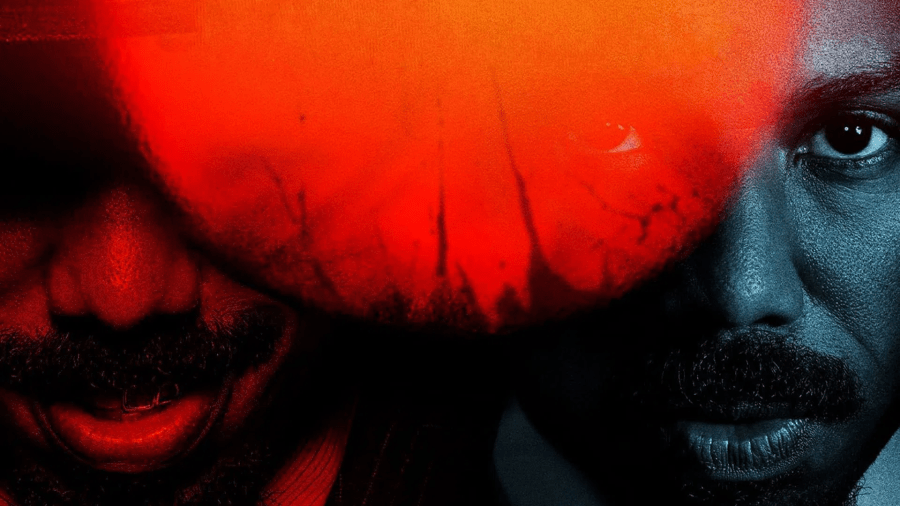
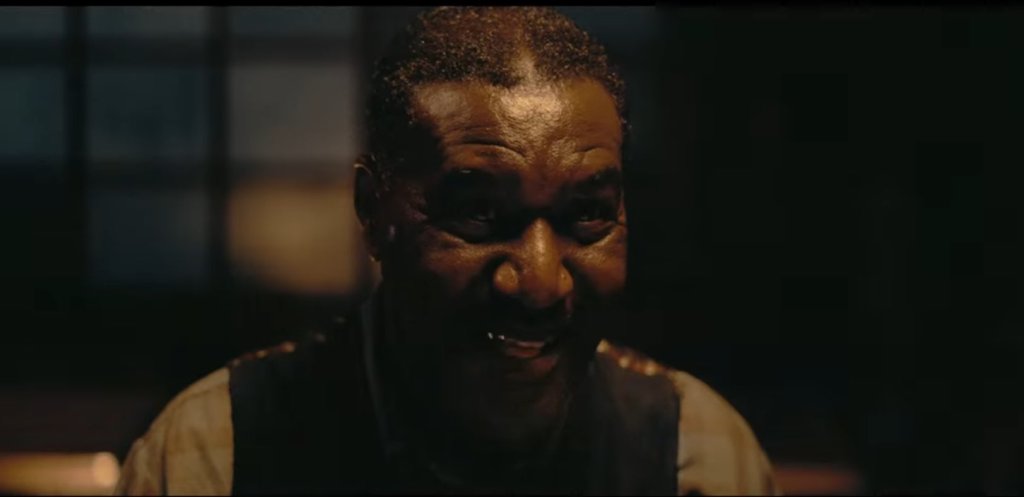
(Speaking of the Blues, Delroy Lindo. Much will be said about Sammie’s juke performance, Remmick’s Lord’s Prayer speech and MBJ playing opposite himself in agonizing exsanguination, but the standout scene I’ll highlight is Lindo describing the violent public execution of a friend, moaning in torment in remembrance of the lynching, and then knocking his hand against the car to create a rhythm. The birth of the Blues in real time. Heartbreaking. Poignant. Important to any and all of us who care about Black music and Black survival.)
Narratively, the high notes of Sinners are numerous: badass women (a nod to all women who were and are brave forces of nature for collective survival), ruthless endurance (because sometimes you have to fight dirty to persist), gushing, glorious blood (the essence of all human life), and cunnilingus! If you hadn’t heard it yet, it is with deep satisfaction that I tell you: the heart of Sinners really lies in the clitoris. Coogler lovingly threads women’s pleasure throughout the tale—it’s not the loudest note, but it is a resonant one. I don’t have any especially deep thoughts about this recurring theme except women’s pleasure saves lives! Cheers!

By the time the audience arrives back where we began, with a blood-soaked and traumatized Sammie disrupting his father’s Sunday service, we share the young boy’s certainty about the power in his gifts. After all, we’ve spent the last hour witnessing the might of Sammie’s musicality, the magic he wields. Sammie’s father implores him to discard his guitar, to throw away his power and his dreams of escaping to a better life. But unlike his cousin Smoke, who willingly discards his lifeline before undertaking a suicide mission of revenge (this was perhaps one of the most satisfying scenes of the film), Sammie refuses to let go.
Sammie’s unwavering grip on his guitar was a beautiful end to the 1932 narrative. As we flash directly from the shot of his hand holding the guitar handle in his father’s church to Sammie owning his own blues club in Chicago 60 years later (bittersweetly named after Pearline who fought until the end and gave her life for Sammie’s). It is an obvious theme but cannot go unsaid: that refusal to release his lifeline, to deny Sammie’s much yearned for way out of the Jim Crow South represented the unwavering strength and capacity to overcome of millions of Black Americans who traveled Northeast, Midwest and West during the Great Migration. Sammie was one of millions of Black Americans who withstood the physical and spiritual violence of the South and made a way out of no way.
But of course, the soul of Sinners is not in its supernatural, but in its realism: the racial trauma portrayed is just as real as Black American survival in its wake, is just as real as the power of music, fellowship and kinship as puissant bonds that have pulled people through impossible odds for generations. Coogler’s final and most powerful assertion is that the sacred space that Sinners invites us into is our reality, that we truly have the ability to forge bonds that transcend the evil around us. It is an incredibly timely message, and a striking final invocation for all viewers. What will we build together that can outlast the wickedness surrounding us?

Coogler has no doubt made a masterpiece that will be remembered in the annals of film history. Sinners is a highlight of my Spring and indeed may be a highlight of my year. I watched twice during opening weekend (and am trying to squeeze in another 4DX viewing before it leaves theaters). It’s always a treat to explore new entries in Black vampire media (and there are indeed some parallels between Sinners’ Stack and Interview with the Vampire’s Louis de Pointe du Lac (AMC, 2022-). If anybody wants that essay, let me know….
As always, thanks for reading & have a bloody wonderful Spring!
Check out my latest personal essay!
Are you what you eat? Reflections on Consuming #DeadDoves After 10+ Years in Fandom
When I first started reading fanfiction 12 years ago, fanfiction was still very uncool. I read fanfiction only under the cover of darkness or in public with a carefully dimmed screen. I shared my hobby only with my closest friends and only in hushed whispers. The combination of secretive embarrassment and youthful slyness was part…
Keep reading
Something went wrong. Please refresh the page and/or try again.
 Kyra's Immortal Longings: Life As It Comes